


This integration requires a Pro plan.
Key Features
Real-Time Verification
Validate emails instantly as users type
99.9% Accuracy
Industry-leading email verification accuracy
Block Invalid Emails
Prevent hard bounces and protect sender reputation
Catch-All Detection
Identify domains that accept any address
Disposable Detection
Block temporary throwaway email addresses
Visual Feedback
Users see validation status in real-time
Setting Up the Integration
1
Get your NeverBounce API key
Log in to your NeverBounce account. In the left sidebar, click API, then select Custom Integration under the “Code” section. Your API key will be displayed on that page. If you don’t have an account, sign up at neverbounce.com.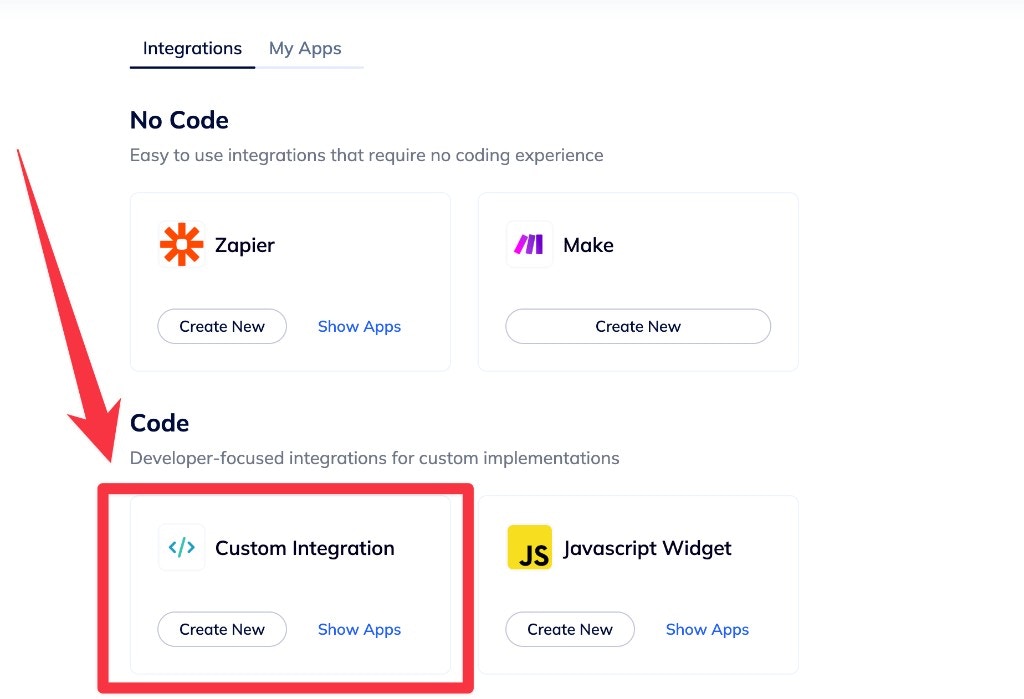
2
Connect NeverBounce in OrbitForms
Go to Integrations in your OrbitForms dashboard. Find NeverBounce and click to open it. Enter your API key and click “Connect NeverBounce” to save.
3
Enable on your forms
Open any form and go to the Integrate tab. Find NeverBounce in the Email Verification section and toggle it on. Configure your blocking options as needed.
4
Test the integration
Submit a test form entry with different email addresses to verify the validation is working. Invalid emails will be blocked and users will see an error message.
Get your API key: In NeverBounce, go to API → Custom Integration to find your key, or open NeverBounce API Settings directly →
How Email Validation Works
When a user enters an email address in your form, NeverBounce analyzes it in real-time and returns a verification status. OrbitForms then applies your configured blocking rules to determine if the email should be accepted.Verification Results
Understanding “Unknown” StatusAn “Unknown” result means NeverBounce couldn’t definitively verify the email. This typically happens when the mail server doesn’t respond or uses greylisting. By default, OrbitForms treats Unknown emails the same as Valid emails, allowing them through. This prevents false rejections of legitimate leads whose mail servers have aggressive spam protection.
Blocking Options
Configure which types of emails to block on the Integrate tab of each form. Each option gives you fine-grained control over the quality of email addresses you accept.Block free email addresses
Gmail, Yahoo, Outlook, etc. This blocks emails from free providers like Gmail or Yahoo. Use this if you only want business emails. Example:[email protected] would be blocked, but [email protected] would be allowed.
Block role accounts
info@, support@, admin@, etc. This blocks generic email addresses that aren’t tied to a real person. Role accounts are typically managed by multiple people or automated systems, making them less valuable for personal outreach. Example:[email protected] or [email protected] would be blocked, but [email protected] would be allowed.
Block catch-all domains
Domains that accept any address Some companies accept emails to any address (even fake ones). This blocks those domains since we can’t verify if the person is real. While this may block some legitimate leads, it significantly reduces the risk of fake submissions. Example:[email protected] would be blocked because the domain accepts all addresses, making verification impossible.
User Experience
Email verification happens seamlessly as users fill out your form. Here’s what they experience:Valid Email
A green checkmark appears next to the email field, indicating the address is valid. The user can proceed with submission.
Invalid Email
An error message explains why the email was rejected. The user must enter a valid email address to continue.
Troubleshooting
API Key Management
Your NeverBounce API key is securely encrypted and stored. You can update or disconnect it at any time:- Go to Integrations in your OrbitForms dashboard
- Click on NeverBounce to open the integration settings
- Use “Update API Key” to change your key, or “Disconnect” to remove it
- Click “Test Connection” to verify your API key is working
Related Documentation

ZeroBounce
AI-powered email validation

Emailable
Fast email verification